Open until 15:00
Honey for Art and Society
How bees inspire us
30.04.2026 – 20.09.2026
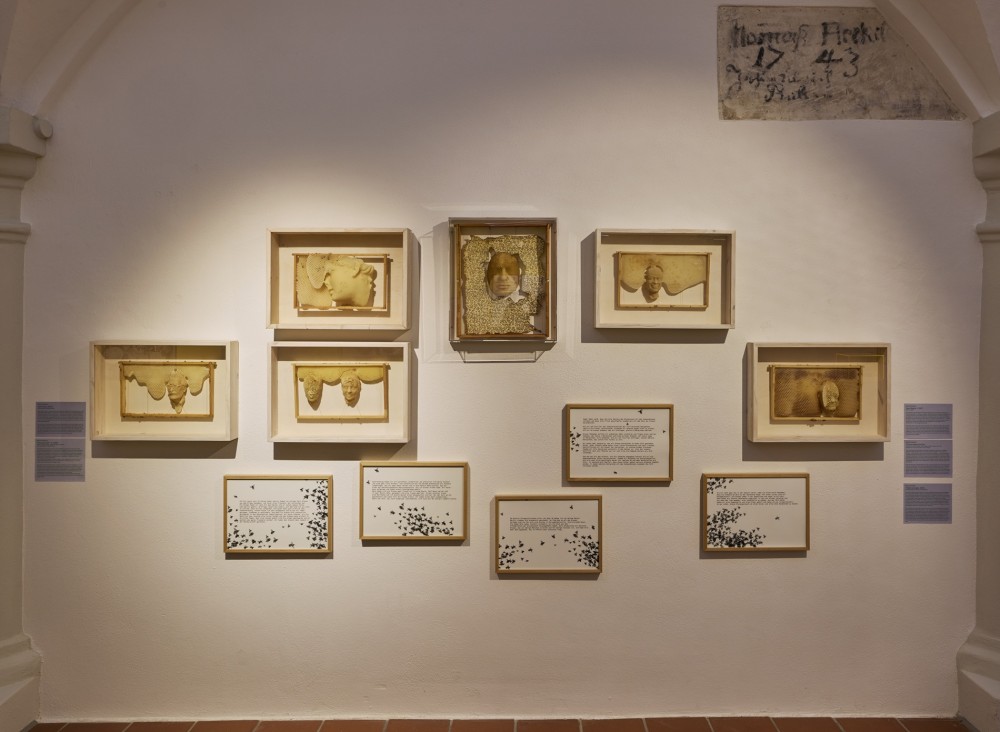
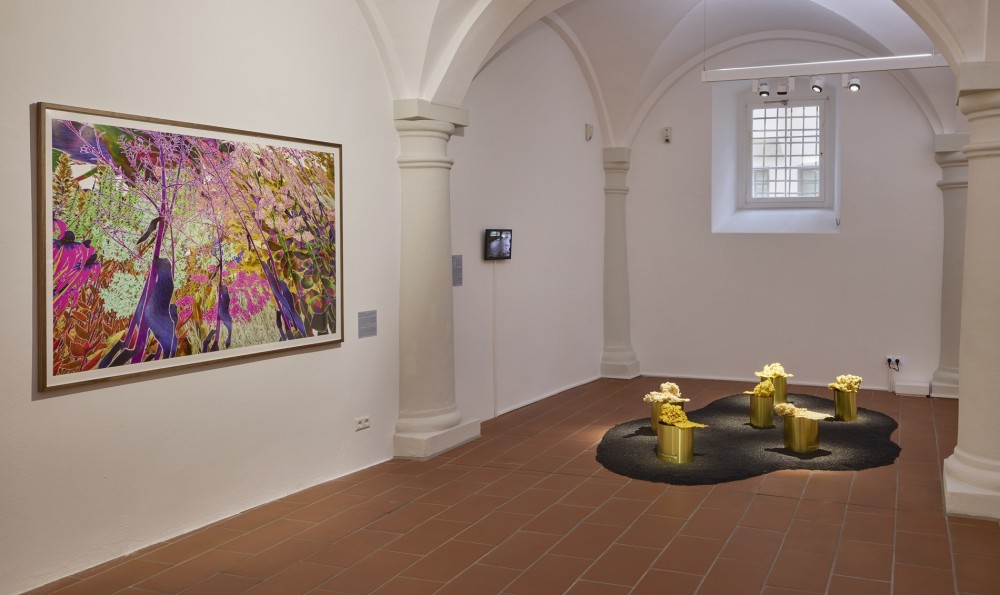
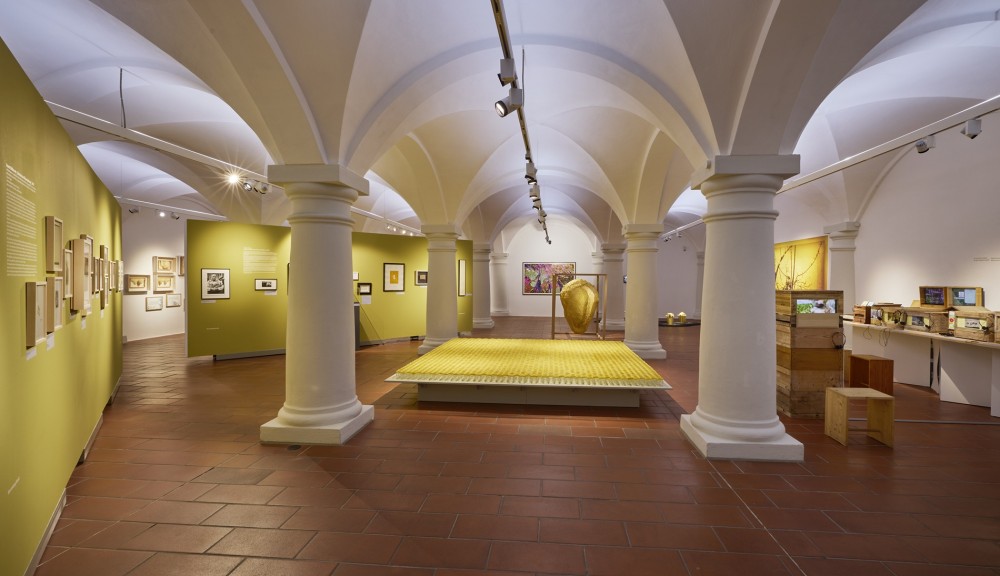
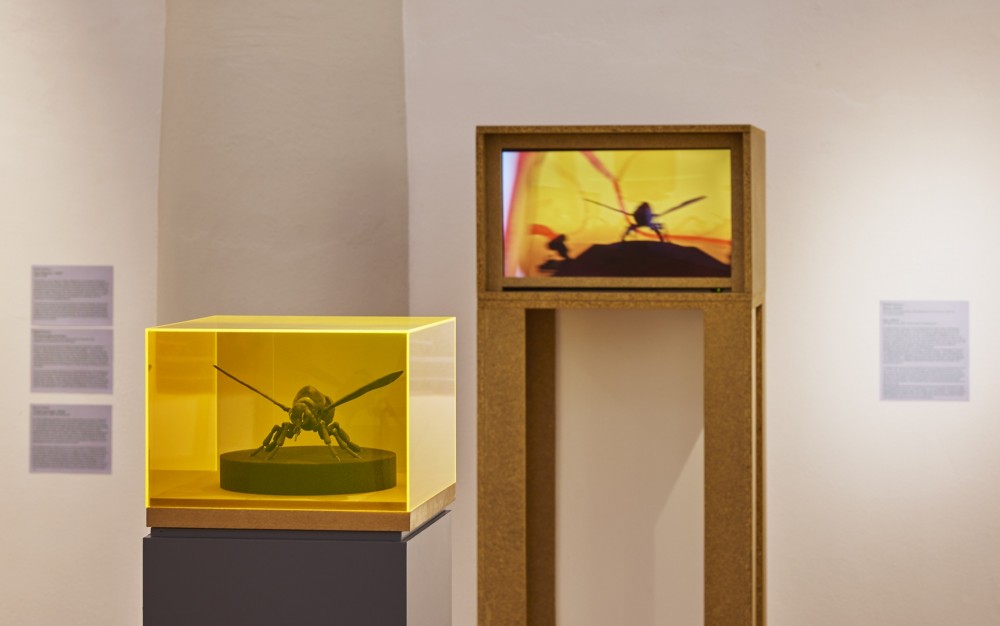
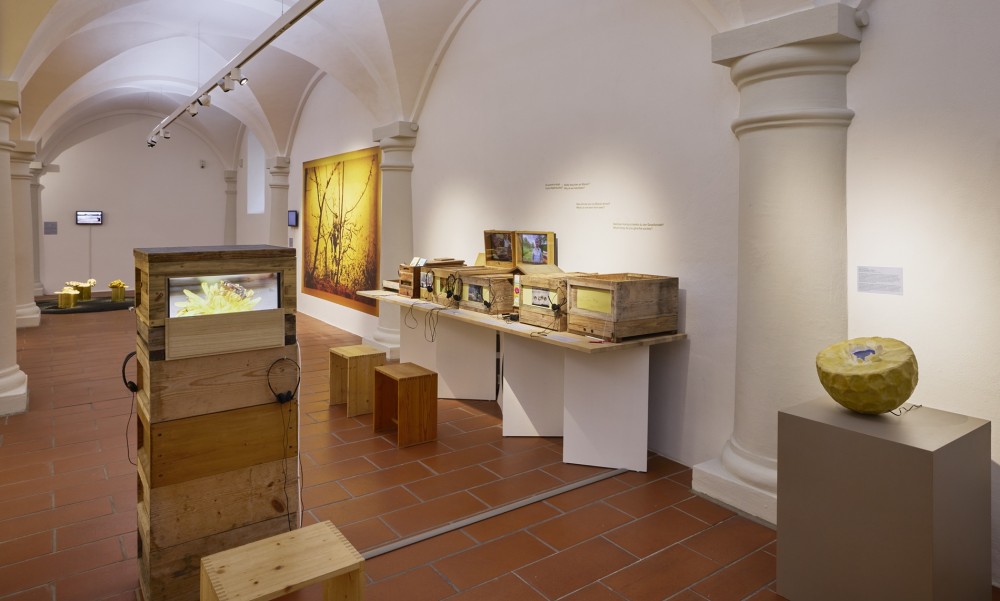
Humans have been connected to bees for many centuries. Honey and wax were luxury products throughout history and are still highly valued today. The fact that bees live together in colonies and communicate with each other in impressive ways amazes us. Bees are therefore among the most popular insects, and the much-cited ‘bee mortality’ has become a metaphor for a dying environment.
The core of the exhibition is the private Kraft art collection from Cologne. It brings together works by Joseph Beuys and his contemporaries such as Michael Buthe, Hede Bühl and Felix Droese. Bees and their products play an important role in Beuys' entire oeuvre. They represent energy, nourishment and warmth. And thus not only a closeness to nature, but also a nourishing social way of thinking and acting together. As Beuys says: ‘The human ability is not to produce honey, but to think, to produce ideas. This is juxtaposed here.’ One of his central installations was the ‘Honey Pump at the Workplace,’ a 150-metre-long hose system through which honey was to be pumped during documenta 1977; the ‘workplace’ was a discussion forum in which the artist was present throughout the entire 100-day duration of the exhibition.
In addition, there are contemporary artworks, some of which refer to Beuys, while others take a different approach. Mathias Danberg shows a sculpture with an integrated video in which hoses and pumps play a central role.
Of course, an exhibition about bees and honey today is inconceivable without considering the threat to bees posed by the overexploitation of nature. Lea Grebe shows us the fragility of these small creatures. And Maximilian Prüfer processes impressions from the Chinese province of Sichuan in his works, where people have to pollinate flowers by hand because there are no more bees. (Incidentally, Joseph Beuys had already drawn attention to these ecological and social problems in the mid-1960s).
Artists Jeanette Zippel and Bärbel Rothhaar have their own beekeeping experiences, and their work stems from their fascination with bees and their collaboration with these insects. Alexandra Daisy Ginsberg imagines the world through the eyes of a bee.
We accompany the art with a beehive full of questions and information, where visitors can learn more about bees, wax and honey, but also ask ourselves what kind of nourishment our society needs today.
Experts have their say in audio and video contributions, and photos illustrate what is being said. We also present two inspiring sustainable bee projects here.
Ein umfangreiches, aktionsreiches Begleitprogramm bereichert die Ausstellung und schafft für Erwachsene und Kinder sinnliche Zugänge zu den verhandelten Themen. Es wird in Kooperation mit dem Bezirks-Imkerverein Ulm e. V. , dem BUND Ulm und dem Botanischen Garten Ulm realisiert.
Während der Ausstellungsdauer verkaufen wir in unserem Museumsshop Produkte der Bio-Imkerei BIENESTO aus Ulm.